
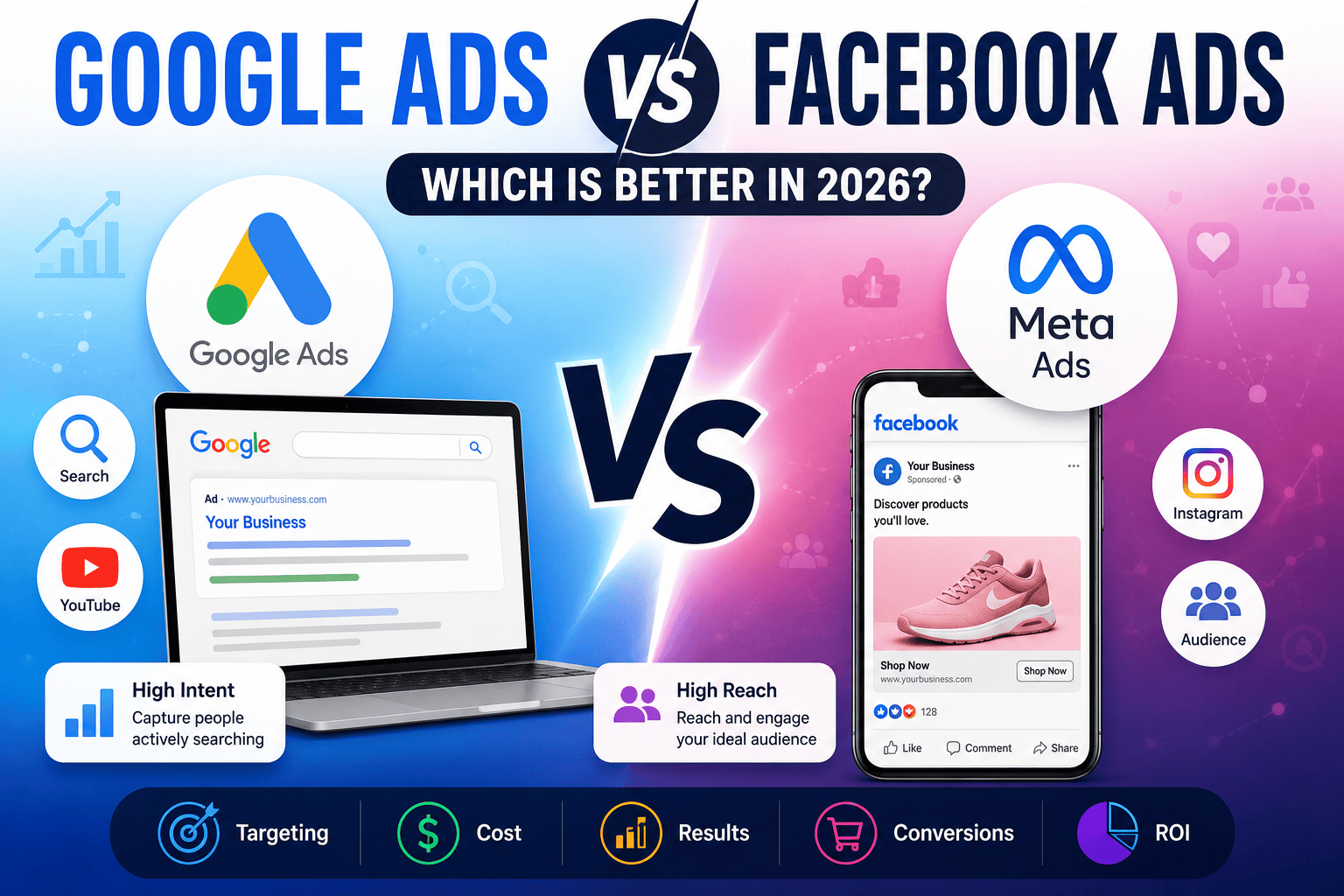

Google Ads vs Facebook Ads: Which Is Better in 2026?
If you’re trying to grow your business online, you’ve probably asked yourself the same question thousands of marketers ask every year: Google Ads vs Facebook Ads — which one actually delivers better results? The honest answer is that both platforms are powerful, but they work in very different ways.
In this guide, we’ll break down how each platform works, compare their strengths, and help you decide which one fits your business goals — or whether you should use both.
Table of Contents
- What Are Google Ads?
- What Are Facebook Ads?
- Key Differences
- Lead Generation
- E-commerce
- Cost-Effectiveness
- Pros and Cons
- Using Both Together
- Which Should You Choose?
- Common Mistakes to Avoid
- Final Verdict
- FAQs
What Are Google Ads?
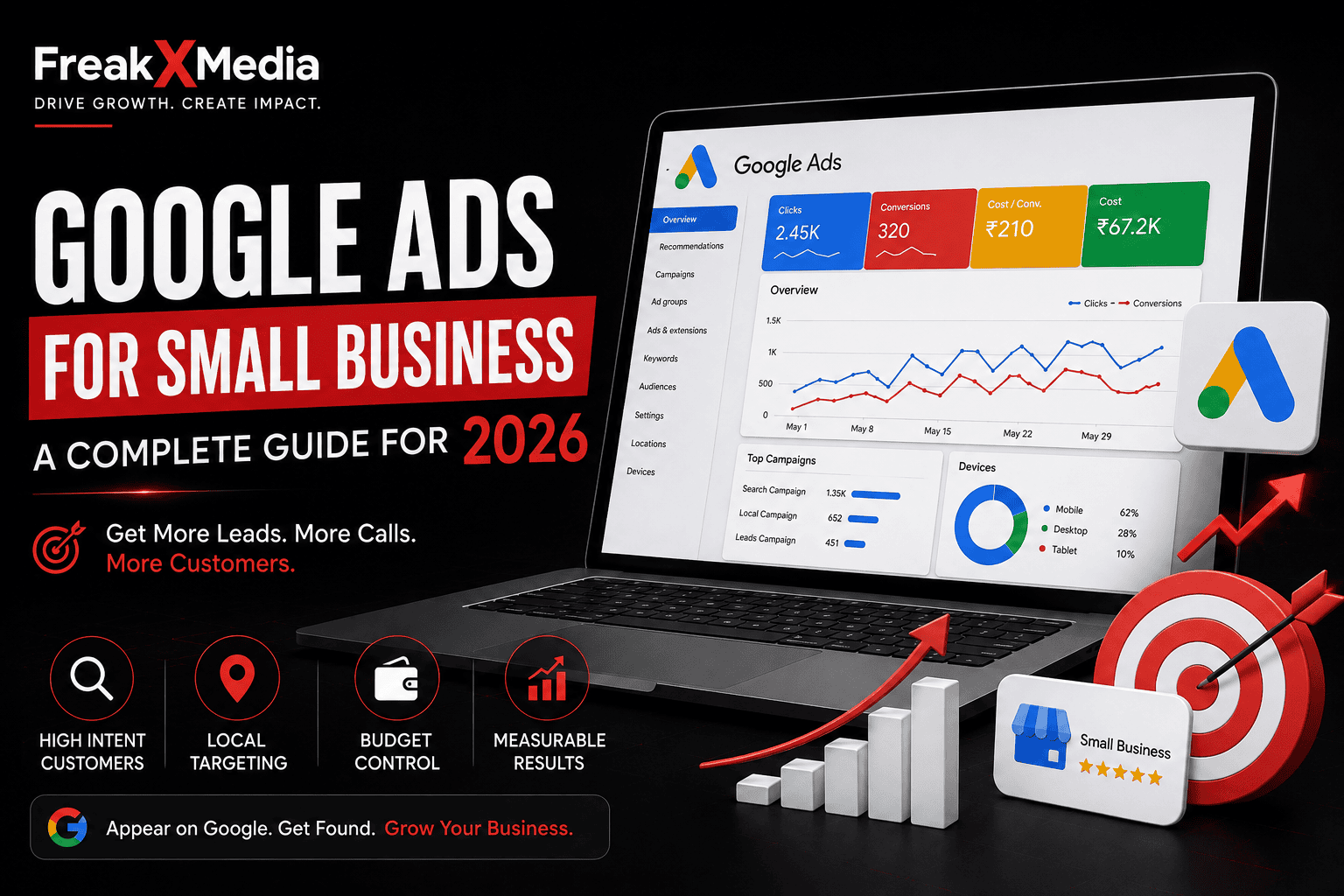
Google Ads is a search-based advertising platform. It shows your ads to people who are actively typing a query into Google, which means you’re reaching people who already have intent.
How it works: You bid on keywords related to your business, and your ad appears when someone searches for those terms. Google Ads runs across several formats:
- Search Ads – text ads shown at the top of Google search results
- Display Ads – banner ads shown across millions of partner websites
- Shopping Ads – product listings with images and prices, ideal for online stores
- YouTube Ads – video ads shown before or during YouTube content
Who should use it: Businesses that want to capture people who are already searching for a solution — think plumbers, lawyers, SaaS tools, or anyone selling something people actively look for.
What Are Facebook Ads?
Facebook Ads (which also covers Instagram, since both run through Meta’s ad platform) works differently. Instead of targeting search intent, it targets people based on interests, behaviors, demographics, and past interactions with your brand.
How it works: You build an audience using targeting filters, then Facebook shows your ad while people scroll through their feed or Stories. This is discovery-based advertising — people aren’t looking for you, but your ad interrupts their scroll at the right moment.
Who should use it: Businesses that want to build brand awareness, showcase visually appealing products, or reach people before they know they need a solution — like fashion brands, coaches, or new product launches.
Google Ads vs Facebook Ads: Key Differences
| Factor | Google Ads | Facebook Ads |
|---|---|---|
| User Intent | High — user is actively searching | Low to medium — user is passively scrolling |
| Targeting | Keyword-based | Interest, behavior, and demographic-based |
| Ad Formats | Text, Shopping, Display, Video | Image, Video, Carousel, Stories, Reels |
| Cost Structure | Pay-per-click, varies by keyword competition | Pay-per-click or impression, varies by audience size |
| Reach | Limited to people actively searching | Broad, based on audience targeting |
| Best Use Case | Capturing existing demand | Creating new demand and awareness |
| Lead Generation | Strong for high-intent leads | Strong for top-of-funnel lead capture |
| E-commerce | Great for product searches (Shopping Ads) | Great for visual product discovery |
| Brand Awareness | Moderate | Very strong |
| Speed of Results | Can be fast for high-intent keywords | Often needs more testing time to find the right audience |
Google Ads vs Facebook Ads for Lead Generation
For lead generation, the right platform depends on how your customers search for solutions. If people typically Google their problem — like “emergency plumber near me” — Google Ads will usually capture leads faster because the intent is already there.
If your offer isn’t something people actively search for yet, Facebook Ads can work well by using lead forms, retargeting, and interest-based targeting to introduce your offer to the right audience before they start searching.
Google Ads vs Facebook Ads for E-commerce
Both platforms can work well for online stores, but they serve different purposes. Google Shopping Ads are effective because they show your product, price, and image directly in search results when someone is ready to buy.
Facebook and Instagram Ads shine when it comes to visual storytelling. Product carousels, videos, and lifestyle imagery can help online stores discover new customers who weren’t searching for the product yet but are drawn in by the visuals.
Which Platform Is More Cost-Effective?
There’s no universal answer here — cost depends on multiple factors, including:
- Your industry and how competitive it is
- The level of competition for your keywords or audience
- Your target audience size and specificity
- Your location and market
- The quality of your campaign setup
- How compelling your offer is
- The strength of your landing page
Rather than chasing a “cheaper” platform, it’s more useful to focus on cost per result relative to your goals. A slightly higher cost per click can still be more profitable if it leads to better-quality leads or sales.
Pros and Cons of Google Ads
Pros:
- Captures people with existing purchase intent
- Multiple ad formats across Search, Shopping, and YouTube
- Can generate leads relatively quickly for competitive keywords
- Strong for local and service-based businesses
Cons:
- Can be competitive and costly for popular keywords
- Requires ongoing keyword research and optimization
- Less effective for building brand awareness from scratch
Pros and Cons of Facebook Ads
Pros:
- Excellent for reaching new audiences and building awareness
- Highly visual formats work well for products and services
- Detailed targeting based on interests and behaviors
- Strong retargeting capabilities
Cons:
- Users aren’t actively searching, so intent is lower
- Often requires more creative testing to find what works
- Ad fatigue can happen quickly if creatives aren’t refreshed
Can You Use Google Ads and Facebook Ads Together?
Yes — and in many cases, this is the smartest strategy. A full-funnel approach often looks like this:
- Facebook and Instagram Ads introduce your brand and build awareness among your target audience.
- Google Search Ads capture people once they start actively searching for a solution.
- Retargeting campaigns (on both platforms) reconnect with people who visited your site or engaged with your ads but didn’t convert yet.
This combination lets you build demand and capture it, rather than relying on just one stage of the customer journey.
Google Ads vs Facebook Ads: Which Should You Choose?
Here’s a practical breakdown by business type:
- Local service businesses (plumbers, electricians, clinics): Google Ads often performs well since people actively search for local solutions.
- E-commerce brands: A mix of Google Shopping Ads and Facebook/Instagram Ads usually works best for visibility and discovery.
- B2B businesses: Google Ads can work for high-intent searches, while Facebook (and LinkedIn) can support awareness and lead nurturing.
- New brands with no search demand yet: Facebook Ads can help build awareness before people start searching for you by name.
- High-intent services (legal, medical, urgent repairs): Google Ads is typically stronger because people are searching with clear intent.
If you’re unsure where to start, our team can help you [get more customers online] through a strategy tailored to your specific business and goals.
Common Paid Advertising Mistakes to Avoid
- Poor targeting – casting too wide or too narrow a net
- No conversion tracking – making it impossible to measure real results
- Weak landing pages – driving traffic to a page that doesn’t convert
- Testing too many things at once – making it hard to know what’s actually working
- Ignoring creative quality – especially important for Facebook and Instagram
- Choosing a platform without considering customer intent
- Focusing only on clicks instead of business results like leads and sales
A well-designed landing page can make a significant difference in your results — if yours needs work, our [web design services] can help align your website with your ad campaigns.
Final Verdict: Google Ads vs Facebook Ads
There’s no single winner in the Google Ads vs Facebook Ads debate. Google Ads is generally stronger for capturing existing demand, while Facebook Ads excels at creating awareness and reaching new audiences.
The right choice depends on your audience, your offer, your objective, your budget, and where your customers are in their journey. For many businesses, the most effective strategy isn’t choosing one platform — it’s using both strategically.
If you’re still building your brand’s online presence, it also helps to make sure your foundation is solid — from having a [build a professional business website] to making sure you [rank higher on Google] organically. And as advertising technology evolves, it’s worth understanding how [AI in digital marketing] is shaping strategy on both platforms.
Frequently Asked Questions
Q1: Google Ads vs Facebook Ads — which is better? Neither platform is universally better. Google Ads works well for capturing active search intent, while Facebook Ads is stronger for building awareness and reaching new audiences.
Q2: Which is cheaper, Google Ads or Facebook Ads? Cost varies by industry, competition, audience, and campaign quality. Neither platform is consistently cheaper — it depends on your specific market and goals.
Q3: Which platform is better for lead generation? Google Ads often works well for high-intent leads who are actively searching, while Facebook Ads can generate leads through targeted forms and awareness campaigns.
Q4: Are Facebook Ads better for e-commerce? Facebook Ads are strong for visual product discovery, while Google Shopping Ads capture people actively searching to buy. Many e-commerce brands use both.
Q5: Can I run Google Ads and Facebook Ads together? Yes. Many businesses use Facebook Ads for awareness and Google Ads to capture demand, combined with retargeting on both platforms.
Q6: Which advertising platform is better for beginners? Both platforms have a learning curve. Beginners often find Facebook Ads’ visual format more approachable, while Google Ads requires more keyword research.
Q7: How much should I spend on paid advertising? Your budget should be based on your industry, goals, and competition. It’s best to start with a testing budget and scale based on performance rather than following a fixed rule.
Q8: Do I need both Google Ads and Facebook Ads for my business? Not necessarily. Some businesses succeed with just one platform. The right approach depends on your audience, budget, and where your customers spend their time.
Not sure which platform is right for your business? [Contact FreakXMedia] today — our team can help you build a paid advertising strategy across Google Ads, Meta Ads, and landing page design that fits your goals and budget.
1 Comment
[…] retargeting. Fresh visuals often cost more to manage. Ad spend and fees stay separate. Comparing Google Ads vs Facebook Ads helps you pick the right platform […]
Your comment is awaiting moderation.
[…] use them to brainstorm ad angles. They summarize performance for campaigns, like those compared in Google Ads vs Facebook Ads. Still, they shouldn’t replace platform-native […]
Your comment is awaiting moderation.
[…] 8. Run Paid Advertising Google Ads and Meta Ads help you reach people faster while your organic efforts grow. Compare both in our guide on Google Ads vs Facebook Ads. […]
Your comment is awaiting moderation.
[…] you’re weighing platforms for paid campaigns, our comparison of [Google Ads vs Facebook Ads] can help you decide where to […]
Your comment is awaiting moderation.
[…] LinkedIn tends to perform better for B2B lead generation. Compare your options in our breakdown of [Google Ads vs Facebook Ads], or explore our [Meta Ads Services] to get […]