

AI in Digital Marketing
AI in digital marketing is now part of everyday work. Freelancers, small shops, and large teams all use it. It can save time, spark ideas, sort data, and help you write messages that fit each customer.
But AI is a tool. It does not replace strategy, creativity, or your knowledge of your business. It also does not promise better results on its own. This guide shows where AI helps, where it falls short, and how to start.
What Is AI in Digital Marketing?
Artificial intelligence is software that learns from patterns in data. It can then write, sort, predict, or suggest things. In marketing, that means help with drafting copy, grouping customers, and summarizing reports.
Older marketing software follows fixed rules you set. AI tools can handle open requests, like “give me ten ad angles for a dental clinic.” Their answers still need your review.
Here is a simple example. A gym owner wants to promote a new yoga class. AI can suggest post ideas, group common customer questions, draft ad variations, and summarize last month’s results. The owner still decides which message sounds right for the gym.
Why Is AI Important in Digital Marketing in 2026?
Marketers now manage more channels and more data than before. Customers expect quick replies and relevant messages. Competitors publish and advertise all the time.
AI helps with this pressure in a few ways:
- Faster research and first drafts
- Quicker reading of large data sets
- Easier personalization
- Less time on repetitive tasks
- More ideas to test in ads
Small teams may gain the most, because they can cover more work. But speed only helps when the work is good.
How Is AI Used in Digital Marketing?
Here are ten practical uses of AI in marketing.
1. AI for Content Creation
AI can suggest blog topics, outlines, first drafts, captions, ad copy, and email drafts. It can also turn one blog post into several social posts. Always fact-check and edit the result, then add your brand voice. AI content does not rank well by default. You can start with a simple workflow for AI content creation.
Example: A bakery owner asks for ten caption ideas, then rewrites the best three in her own words.
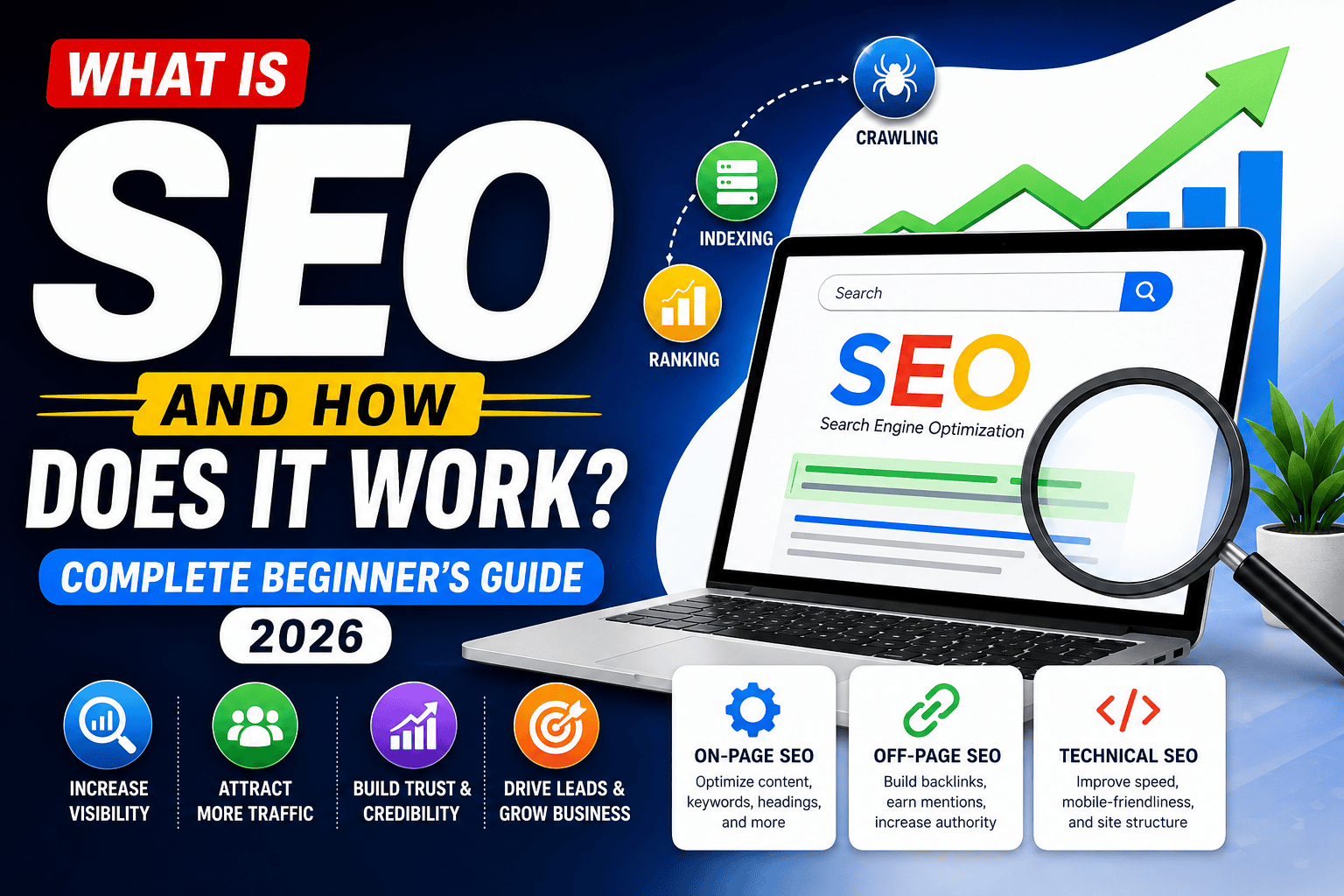
2. AI for SEO
AI can suggest keywords, check search intent, group topics, and draft meta titles. It can also point out internal link ideas. It supports SEO work but does not replace strategy. Useful, original content still matters, as the Google Search Central guidance explains.
Start by learning to understand how SEO works. Search is also changing, so it helps to optimize content for AI-powered search. If you want the basics of getting found, read how to rank higher on Google.
3. AI for Social Media Marketing
AI can suggest post ideas, build content calendars, and write caption variations. It can also summarize what your audience talks about.
Example: A salon owner asks for a four-week plan with hair-care tips, then picks the ideas that fit her clients.
4. AI for Google Ads
AI can draft ad copy variations, suggest keywords, and summarize campaign reports. Google also builds AI into its own ad tools.
You still need to watch budgets, search terms, and results. No tool guarantees lower costs or better returns. Our team also offers Google Ads services for businesses that want hands-on help.
5. AI for Meta Ads
AI can suggest creative ideas, copy variations, and test plans for Facebook and Instagram ads. It can also help you plan retargeting messages for people who visited your site.
It cannot create a winning campaign alone. You still choose the offer, audience, and budget. If you are unsure where to spend, compare Google Ads vs Facebook Ads. Businesses that prefer expert support can explore Meta Ads services.
6. AI for Email Marketing
AI can suggest subject lines, draft emails, and split your list into groups. It can also write follow-up messages.
Example: An online store asks for three subject lines for a sale email. It tests two and keeps the one that gets more opens.
7. AI for Customer Support
AI chatbots can answer common questions, share store hours, and collect lead details. This frees your team for harder issues. Complex or sensitive problems should go to a real person, so always offer that option.
8. AI for Marketing Research
AI can summarize customer reviews, group common questions, and point out content gaps. It can also help you scan competitor pages.
Check important facts before using them. AI can sound sure while being wrong.
9. AI for Marketing Analytics
AI can spot patterns in website traffic, ad results, and content performance. It can explain a report in plain words.
Data is not a decision. AI may show that one page converts better, but you decide what that means for your budget.
10. AI for Marketing Automation and Personalization
AI marketing automation can send messages based on what people do. It can also group customers by interest.
Example: A visitor fills out a website form asking about web design. Within minutes, they get a friendly email with a relevant case study and a booking link. A person reviews replies and steps in when needed. This kind of flow can help you generate leads online without missing follow-ups.
AI in Digital Marketing vs Traditional Marketing
| Area | Traditional Marketing | With AI Support |
|---|---|---|
| Content creation | Written from scratch | Drafts and ideas in minutes |
| Data analysis | Manual reports | Faster pattern spotting |
| Personalization | Broad groups | Smaller, more specific groups |
| Automation | Limited, rule-based | Triggered by customer actions |
| Research | Slow and manual | Quick summaries |
| Speed | Depends on team size | Faster for repeat tasks |
| Human involvement | High at every step | Focused on review and strategy |
| Decision-making | Human | Still human |
AI does not mean dropping proven methods. Most businesses get the best results by using both together.
Can AI Replace Digital Marketers?
AI can automate or speed up many repetitive tasks. But marketing also needs strategy, creativity, brand knowledge, and customer understanding. It needs judgment, clear communication, and ethical choices too.
Nobody can predict the future with certainty. A more useful question is how marketers can use AI well. People who learn to guide AI and check its work will likely be in a strong position.
Benefits of Using AI in Digital Marketing
The benefits of AI in digital marketing depend on how you use it. Possible gains include:
- Saving time on repeat tasks
- Faster research
- More content ideas
- Better organization
- Quicker analysis
- Easier personalization
- More output from small teams
These are potential benefits, not guarantees.
Common Mistakes When Using AI for Marketing
- Publishing without editing. Raw AI text often sounds flat.
- Trusting facts blindly. Always verify names, numbers, and claims.
- Writing generic content. Add real examples from your business.
- Losing brand voice. Give AI clear tone rules and edit to match.
- Over-automating. Customers still want to reach a human.
- Ignoring privacy. Never paste sensitive customer data into tools without checking their policies.
- Having no strategy. Tools work best when goals come first.
- Letting AI decide everything. Use it for input, not final calls.
How Small Businesses Can Start Using AI in Digital Marketing
- Pick one repetitive task, such as writing captions.
- Use AI for brainstorming and first drafts.
- Review everything before you publish.
- Save prompts that work so you can repeat them.
- Track whether AI really saves time or improves results.
- Add more tasks only when the first one works.
Your base matters too. If you have not yet, build a professional business website so your marketing has a strong home. Our web design services can help with that.
AI Marketing Tools
Instead of chasing every new app, think in categories:
- AI writing tools: drafts, captions, and email copy
- AI design tools: social graphics and ad visuals
- AI SEO tools: keyword and content suggestions
- AI analytics tools: report summaries and trend spotting
- AI automation tools: workflows and follow-ups
- AI customer support tools: chatbots and FAQ replies
- AI advertising tools: ad variations and campaign insights
Businesses that want to explore specific platforms can compare different AI marketing tools.
Frequently Asked Questions
What is AI in digital marketing?
AI in digital marketing means using smart software to help with marketing tasks. These include writing, research, ad testing, analytics, and customer messaging. People still guide the strategy.
How is AI used in digital marketing?
Marketers use AI for content, SEO, social media, ads, email, support, research, analytics, and automation. It mostly speeds up repetitive work and supports decisions.
Can AI replace digital marketers?
AI can handle many routine tasks, but marketing also needs strategy, creativity, and human judgment. Most experts see AI as a helper, though no one can promise how roles will change.
How can small businesses use AI for marketing?
Start with one task, like captions or email drafts. Review every output, track time saved, and expand slowly.
What are AI marketing tools?
They are apps that use AI for tasks like writing, design, SEO, analytics, automation, and support. Choose tools that match your goals and budget.
Is AI good for SEO and content marketing?
It can help with ideas, outlines, and drafts. But content should be original, accurate, and useful to readers. AI does not guarantee rankings.