


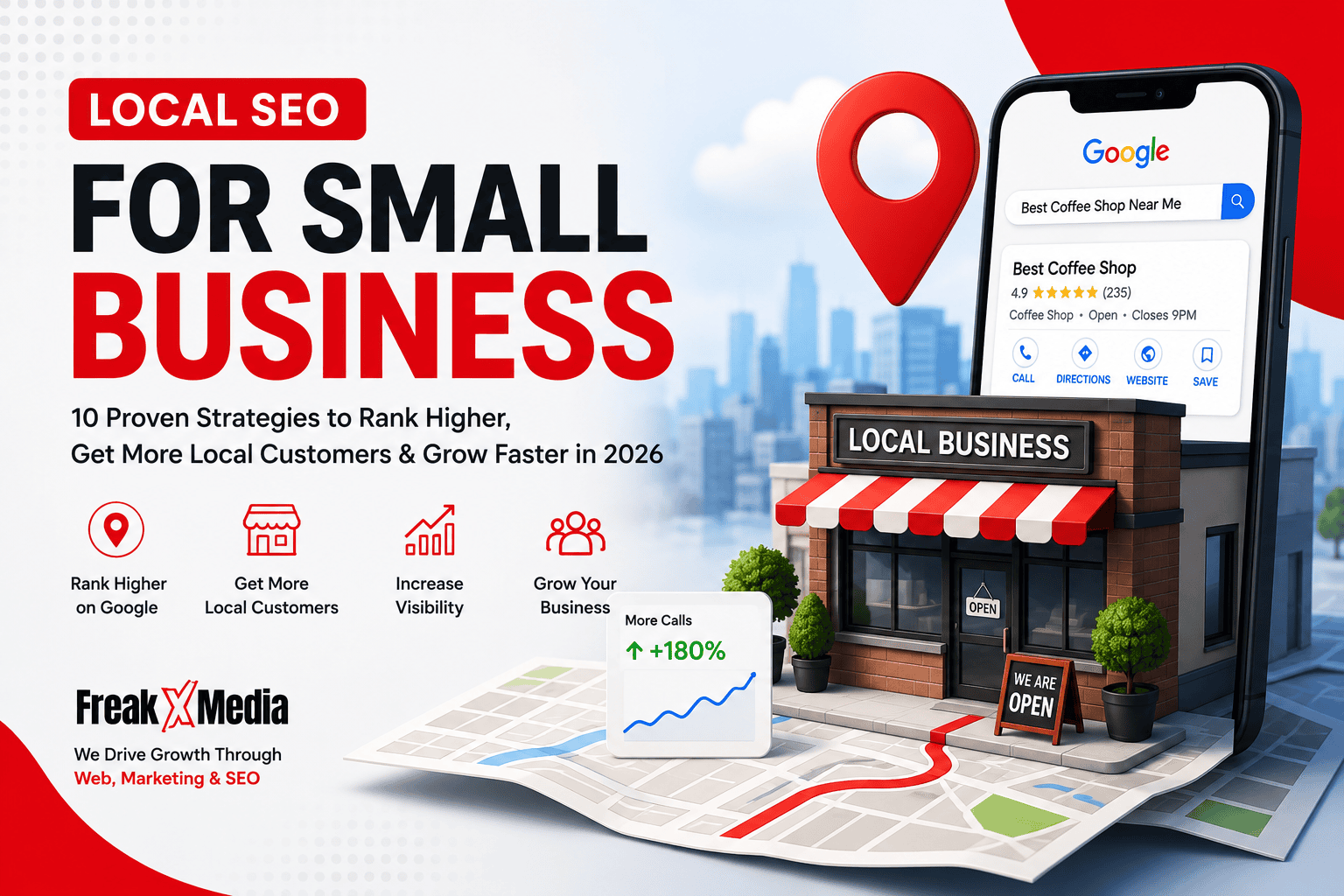

Local SEO for Small Business
If you own a small business, you already know how tough it is to get noticed online. Big brands have big budgets. But here’s the good news — you don’t need a huge budget to win. You need smart local SEO for small business strategies.
Local SEO for small business is the process of optimizing your online presence so people nearby can find you on Google. Think about it. When someone searches “coffee shop near me” or “plumber in my area,” you want your business to show up first, not your competitor’s.
In this guide, we’ll walk you through everything you need to know. You’ll learn what local SEO is, why it matters in 2026, and the exact steps to rank higher in your area. Let’s dive in.
Table of Contents
- What is Local SEO for Small Business?
- Why Local SEO Matters in 2026
- 10 Proven Local SEO Strategies for Small Businesses
- Common Local SEO Mistakes to Avoid
- Local SEO vs Traditional SEO
- Free Tools for Local SEO
- Local SEO Checklist
- Frequently Asked Questions
- Conclusion
What is Local SEO for Small Business?
Local SEO for small business means optimizing your website and online listings so you rank higher in local search results. This includes Google Maps, Google’s local pack, and organic search results tied to your area.
Unlike traditional SEO, which targets a national or global audience, local SEO focuses on people close to you. It’s built for shops, clinics, restaurants, salons, and service providers who rely on foot traffic or local clients.
Here’s a simple example. Say you run a bakery in Delhi. Someone nearby searches “best bakery near me.” If your local SEO is strong, your bakery shows up on top, along with your address, phone number, and reviews. That’s the power of local search.
Why Local SEO Matters in 2026
Search habits have changed a lot. More people now use voice search and mobile devices to find local businesses. In fact, “near me” searches have grown massively over the past few years.
Here’s why local SEO for small business is more important than ever:
- Mobile-first searches are the new normal. Most local searches happen on phones.
- Voice search is booming. People ask Siri or Google Assistant for nearby services.
- Consumer trust depends on reviews and local signals more than ever.
- Google’s algorithm now prioritizes relevance, distance, and prominence for local queries.
If you skip local SEO, you’re basically invisible to customers who are ready to buy right now. That’s a missed opportunity you can’t afford in 2026.
10 Proven Local SEO Strategies for Small Businesses
Ready for the good stuff? Here are 10 practical, easy-to-follow strategies to boost your local rankings.
1. Claim and Optimize Your Google Business Profile
Your Google Business Profile is the heart of local SEO. Fill out every section — hours, category, photos, and description. Keep your information accurate and updated. You can learn more directly from Google’s own resources on Google Business Profile setup and management.
2. Get Consistent NAP Citations
NAP stands for Name, Address, and Phone number. Make sure this information is exactly the same across your website, social media, and online directories. Inconsistent details confuse Google and hurt your rankings.
3. Collect and Respond to Reviews
Reviews build trust. Ask happy customers to leave a review on Google. Then, always respond — even to negative ones. It shows you care and helps your credibility.
4. Optimize Your Website for Local Keywords
Use location-based keywords naturally in your titles, headings, and content. For example, instead of just “plumbing services,” use “plumbing services in Delhi.”
5. Build Local Backlinks
Partner with local bloggers, news sites, or business associations to get backlinks. These links tell Google your business is trusted in the community.
6. Create Location-Specific Content
Write blog posts about local events, guides, or news related to your industry. This helps you connect with your community and boosts relevance.
7. Use Schema Markup
Add local business schema to your website. This helps search engines understand your business type, location, and services better.
8. Optimize for Mobile
Your website must load fast and look great on phones. Most local searches happen on mobile, so a slow site means lost customers.
9. List Your Business on Local Directories
Add your business to directories like Yelp, Justdial, and industry-specific listings. This strengthens your local SEO for small business efforts.
10. Track and Improve Continuously
Local SEO isn’t a one-time task. Monitor your rankings, reviews, and traffic regularly. Adjust your strategy based on what’s working.
Common Local SEO Mistakes to Avoid
Even well-meaning business owners make these errors. Avoid them to protect your rankings.
- Ignoring or forgetting to update your Google Business Profile
- Using different business names or addresses across platforms
- Buying fake reviews (this can get you penalized)
- Neglecting mobile optimization
- Skipping local keywords in your content
- Not responding to customer reviews at all
Fixing these mistakes can make a real difference in how fast you climb the rankings.
Local SEO vs Traditional SEO
Many business owners confuse the two. Here’s a simple breakdown to clear things up.
| Factor | Local SEO for Small Business | Traditional SEO |
|---|---|---|
| Target Audience | Nearby customers | National or global audience |
| Focus | Google Maps, local pack, reviews | Organic rankings across broader keywords |
| Key Ranking Factors | Proximity, relevance, reviews | Backlinks, content depth, authority |
| Best For | Local shops, clinics, restaurants | E-commerce, SaaS, large brands |
| Tools Used | Google Business Profile, citations | Site-wide SEO audits, link building |
Both strategies matter, but if you’re a small business owner, local SEO should be your top priority.
Free Tools for Local SEO
You don’t need to spend a fortune to get started. Here are some free tools that work well:
- Google Business Profile – Manage your local listing directly
- Google Search Console – Track your website’s search performance
- Google Keyword Planner – Find local keyword ideas
- Ubersuggest (free version) – Check local keyword volume
- BrightLocal (free trial) – Audit your local SEO health
For deeper technical guidance, Google Search Central offers free, official documentation on how search really works.
Local SEO Checklist
Use this quick checklist to make sure you’ve covered the basics.
- Claim and verify your Google Business Profile
- Add accurate NAP details everywhere online
- Collect at least 10 genuine customer reviews
- Add local keywords to your website content
- Make sure your site is mobile-friendly
- Add schema markup to your homepage
- List your business on 5+ local directories
- Publish one local-focused blog post per month
- Track your rankings monthly
Frequently Asked Questions
1. What is local SEO for small business? It’s the process of optimizing your online presence so nearby customers can find you easily on Google Search and Maps.
2. How long does local SEO take to show results? Usually, you’ll start seeing improvements within 3 to 6 months, depending on your competition and effort.
3. Is local SEO expensive? Not necessarily. Many strategies, like optimizing your Google Business Profile, are completely free.
4. Do I need a website for local SEO to work? A website helps a lot, but even without one, an optimized Google Business Profile can drive local traffic.
5. How important are reviews for local SEO? Very important. Reviews influence both rankings and customer trust, so they should be a top priority.
6. Can local SEO help a service-area business without a storefront? Yes. You can still rank well by setting a defined service area in your Google Business Profile.
7. What’s the difference between local SEO and Google Ads? Local SEO builds long-term organic visibility, while Google Ads gets you instant, paid visibility. Both work well together.
8. How often should I update my local SEO strategy? Review and refresh your strategy every few months, especially your listings, reviews, and content.
Conclusion
Local SEO for small business isn’t optional anymore — it’s essential. With more people searching “near me” every day, your business needs to show up where it matters most.
Start small. Claim your Google Business Profile, collect reviews, and optimize your website. Over time, these small steps add up to big results.
Ready to grow your local presence without the guesswork? FreakXMedia’s Local SEO Services can help you rank higher, attract more local customers, and grow your business faster. Contact us today to get started with a free local SEO audit.